
Blog Homepage / Experiences & Events
What to wear on a Mongolian camel expedition by Transalpine-Run racer Jamie Ramsay

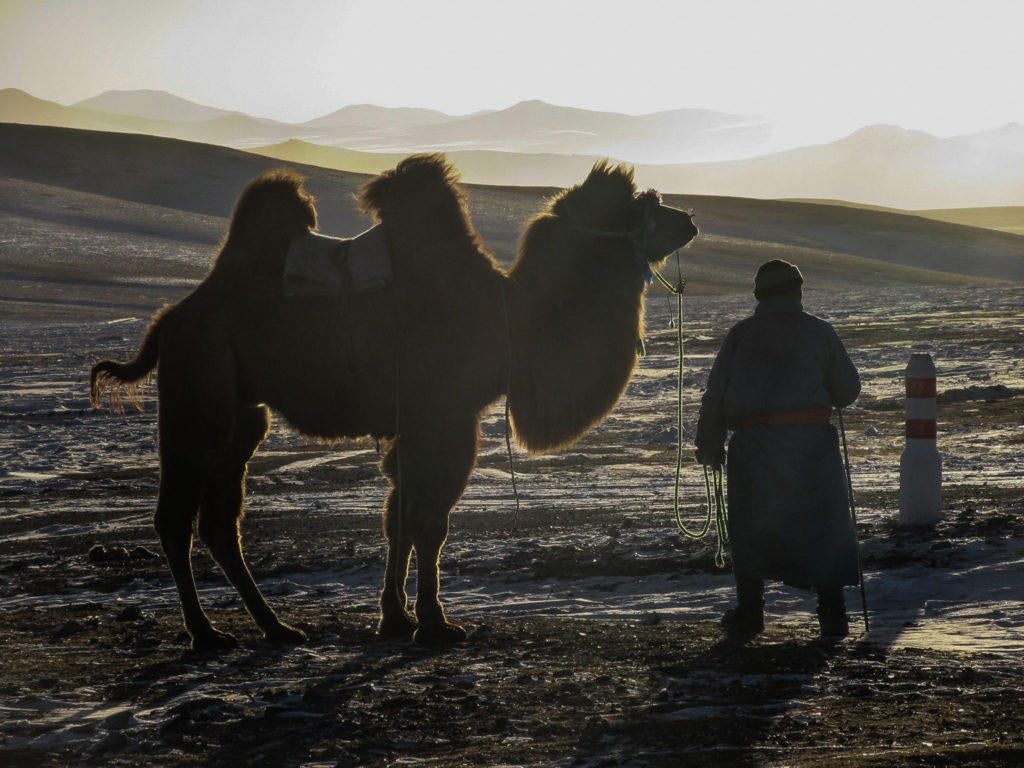
In October, I received a Facebook message from world-wide walker, Angela Maxwell. She quit her job in 2014 and since then has been walking around the world covering over 17,000km while trying to stick to a rough budget of $5 a day. The reason for her message was to inquire whether I would be interested in joining an expedition she was taking part in with a British adventurer Karl Bushby and a Mongolia female adventurer, Baigalmaa Norjmaa. After having run the GORE-TEX Transalpine-Run 2017 last summer I was up to a new adventure. Intrigued to learn more, I jumped on a Skype call to learn more about the expedition and with every sentence, I knew I had to be part of it. Karl Bushy has been walking around the world for 18 years and is on course to be the first human to walk around the world without any outside help from boats, cars or planes. His journey has included crossing the Darien Gap during the period of political unrest in Colombia and being the first human to walk from America to Russia over the Baring Strait in modern times. When he reached Ulaanbaatar he met Mongolian adventurer, Baigalmaa Norjmaa, and over a glass of wine learnt about her dream to be the first person to walk camels from Ulaanbaatar to London. Over time the dream started to become a reality, camels were bought, plans were made and when I got the message it was time to put together a team to kick-start an expedition that is expected to last three years and cover 12,000km. [gallery size="full" columns="1" ids="3238,3237,3231"] I am primarily a runner, having completed several demanding challenges including the GORE-TEX Transalpine-Run, in which I participated together with Kev Foster last year. However, I am also drawn to anything that is extraordinary, challenging and involves the test of endurance. In the past I have primarily run, swam and cycled but never had I walked and the more I pondered my involvement the more I was drawn to the new challenges it presented. Due to the timing of the adventure, my involvement would be during the treacherous Mongolian winter where snow and minus 20 to 40 degrees are commonplace, conditions I am not accustomed to. The adventure would also include taking care of 10 Bactrian camels which even in good weather conditions would be challenging. Finally, I would be part of a team. Over the last five years, I have adventured over 22,000km in 22 different countries and the only 265km of that have not been solo. Being part of a team was going to be my biggest test, but that is a story for another time. Within 24 hours I had talked with Karl and had committed to being part of the expedition. A few weeks later, I was flying to the Mongolian capital to start my next adventure. The first couple of weeks was spent training the camels, buying the necessary equipment and preparing for the long walk west. 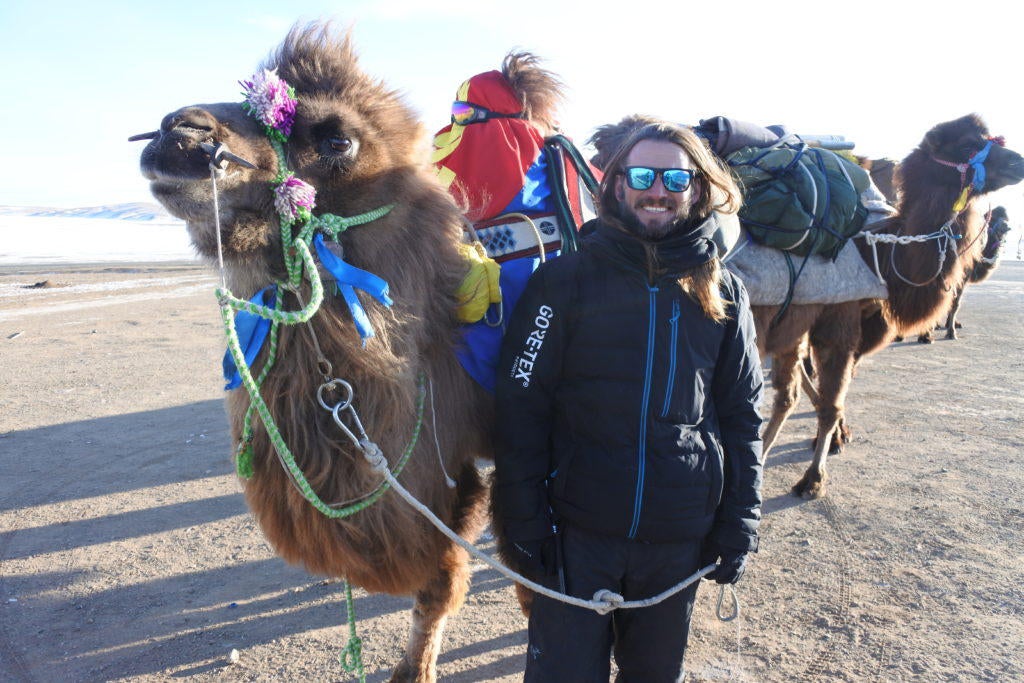 Once we were on the move and walking west across Mongolia, it was apparent that staying warm and dry was going to be paramount to how rewarding this expedition was going to be for me. If I allowed the minus temperatures to get the better of me then there would be no chance I could work with the camels or be a useful part of the team. The daily temperatures ranged from about -6 degrees at mid-day to over -20 at night but with the wind, those temperatures felt far more severe. On previous expeditions, I have relied on using layers to adapt to the range of temperatures and weather conditions I could come up against. On this expedition, I would follow the same principal but increase the thickness and quantity of the layers used.
 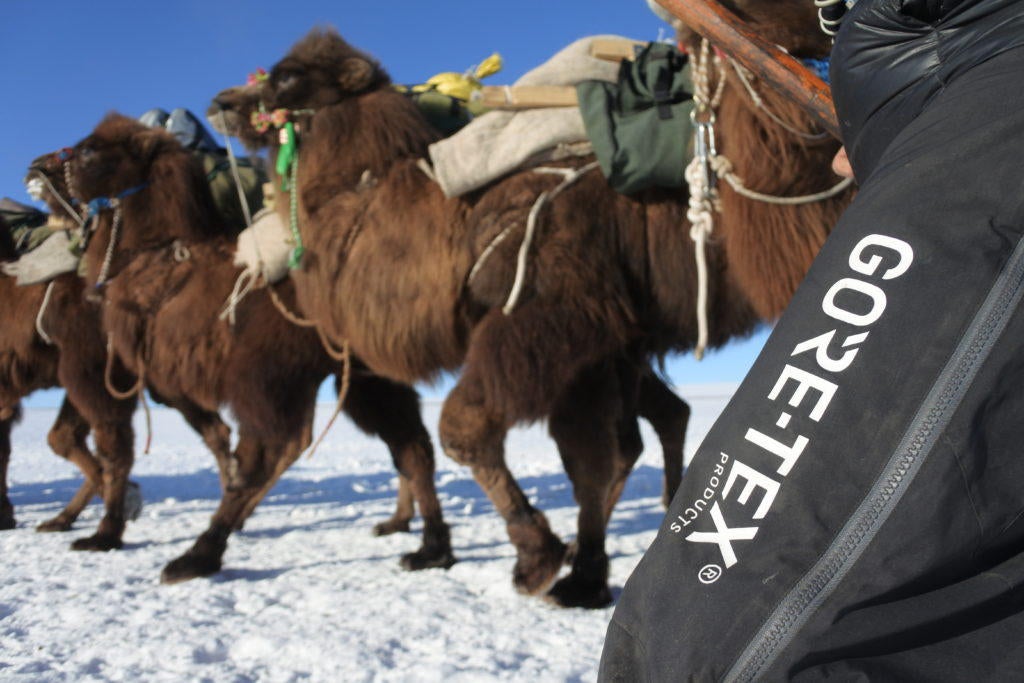 For me, keeping your feet warm and dry is essential and I needed to choose footwear that would give me the warmth needed and the flexibility to wear for long periods of time and cover long distances. When seeking advice, I was shown ridiculously ridged expedition boots and footwear that was clearly not appropriate. In the end, I opted for a pair of Scarpa R-Evo GTX boots. They delivered the support and grip needed and equipped with GORE-TEX product technology it meant my feet would stay dry as I trudged through the snow. I bought them a size larger than normal but wish I had gone for another half size bigger as you want to have the option to wear thick socks, liners and still have room to wiggle your toes. If your boots are too tight then your feet are cold. The socks I used were Bridgedale Summits and they were so good I wore them nearly every day for 40 days.
 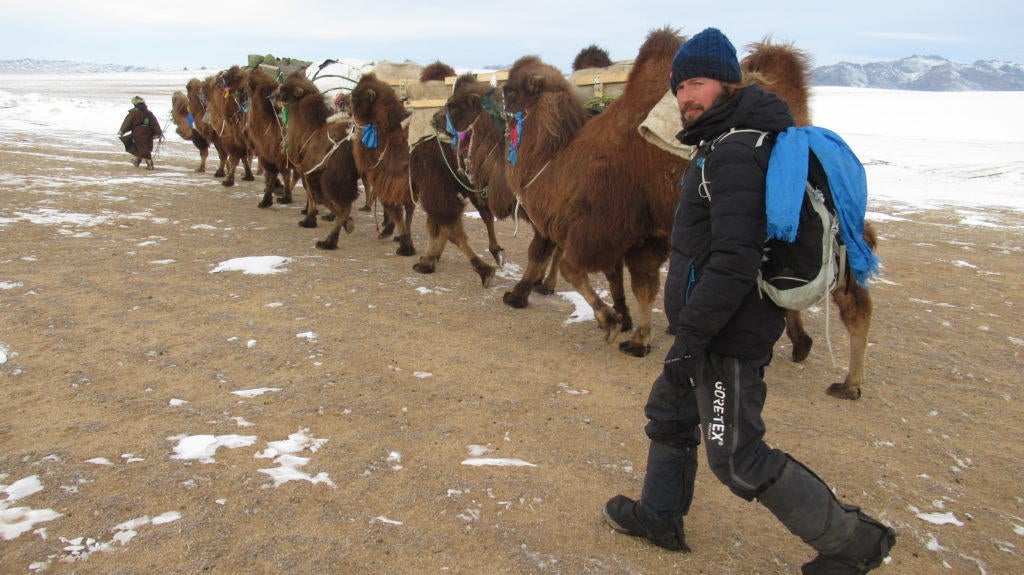 The core is the most important part of the body to keep warm. If this part gets cold, then your extremities don’t stand a chance. My first layer was a 200 Merino wool long-sleeve shirt which would wick the sweat away from my body and theoretically reduce odour. On top of this, I wore a GORE® M GORE® WINDSTOPPER® Base Layer Shirt and then a GORE® R3 GORE® WINDSTOPPER® Vest. These two layers provided me with amazing core warmth and with full zips allowed me to regulate the temperature during the day. I brought three outer layers that I could use depending on the weather conditions. The first was a light down jacket for warmer (-10) walking, a The North Face Crossfire 550 down WINDSTOPPER® jacket for more extreme temperatures and then a GORE Rescue Run Jacketto add a final waterproof and windproof layer.
 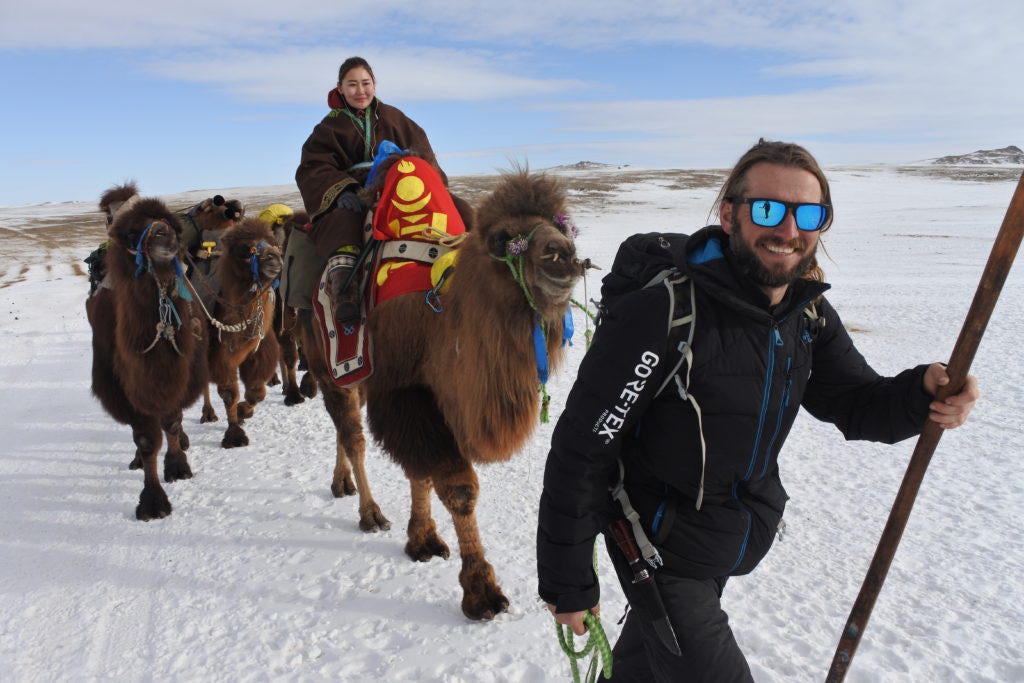 On my head, I wore a Montane WINDSTOPPER® beanie and on my hands, I had a pair of GORE® M GORE® WINDSTOPPER® Gloves or The North Face Montana GORE-TEX gloves. While this seems like a lot of clothing (see full list below) due to its technical design, it packed down to practically nothing.
 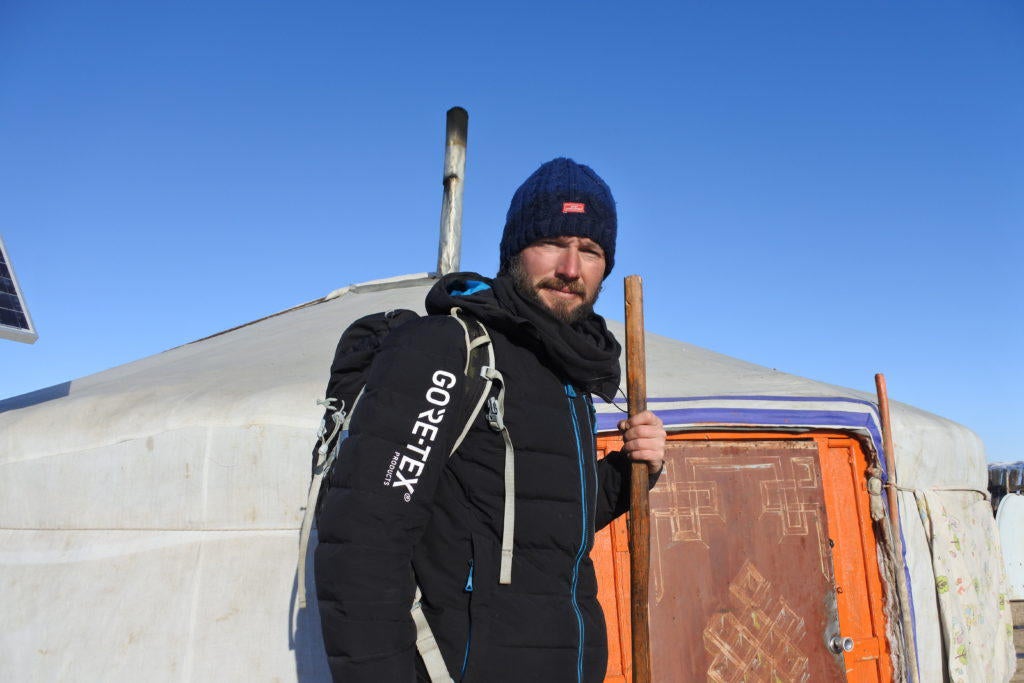 My biggest learning from the expedition was to buy clever, buy technical and don’t just be loyal to a brand you like but put your faith in the technology that is protecting you. For this expedition, the GORE-TEX WINDSTOPPER® technology was my saviour due to the harsh and freezing cold winds in the Mongolian steppe. Without it, I would have had a very different experience.