

Made to last. Valued for longer.
How durability can turn lasting performance into lasting value, from the first experience to the next.
We all own something we could easily replace, yet don’t. A jacket with worn cuffs, a few patches around an elbow, or a zipper that’s been fixed more than once. A new piece is just a few clicks or a trip to the shop away, but we keep the old one because it’s been lived in. It’s been through things with us.
We’ve all owned something we’ve discarded too. Something with years of use left in it. A jacket that still keeps the rain out, or trail shoes with plenty of muddy miles left in them. We got rid of them because they looked dated, lost their fit, or just because we fancied something new.
Same person, same wardrobe, two very different decisions. Working out why one item stays and the other goes was the starting point for GORE-TEX® Brand’s Culture Panel 2.0. This was the latest event in a series of live panels and hosted a discussion between Marie Måwe (Director of Sustainability at GORE-TEX® Fabrics), Catherine Salvidge (Senior Specialist - Textiles at WRAP UK) and Chris Speyer (Chief Merchandising Officer at MEC) about what makes durability desirable. It raised two important questions: how can durability drive value, and can a worn product hold on to any of it?
People want durability but they can’t always see it.
The outdoors industry has long been making the case for durability. What it hasn’t agreed on is how to make durability something people choose again and again.

Studies show that most people want durable clothing. In research by the Waste and Resources Action Programme (WRAP), 83% of US and EU shoppers said durability is an important factor when they buy clothing. Around 70% also said they struggle to spot it in a shop. Catherine told us that “customers are really lacking confidence at the point of purchase”.
So they end up guessing, mostly on price, brand and fabric. WRAP and the University of Leeds in the UK tested over 200 garments to see whether those guesses are reliable. Among about 50 T-shirts, one that cost £4 (€4.75) ranked 15th for durability. One that cost £139 (€164) ranked 28th.
If durability can’t easily be seen, that's a problem. Catherine said the industry needs “that consistent way to really define and measure durability... until we have that, it’s really challenging to be able to educate, and change behaviours”. She also made the case for why it’s still worth the effort. Clear, trusted, independent evidence of durability could drive what people choose, and give brands that invest in it a “competitive advantage”.
Trust starts with proof
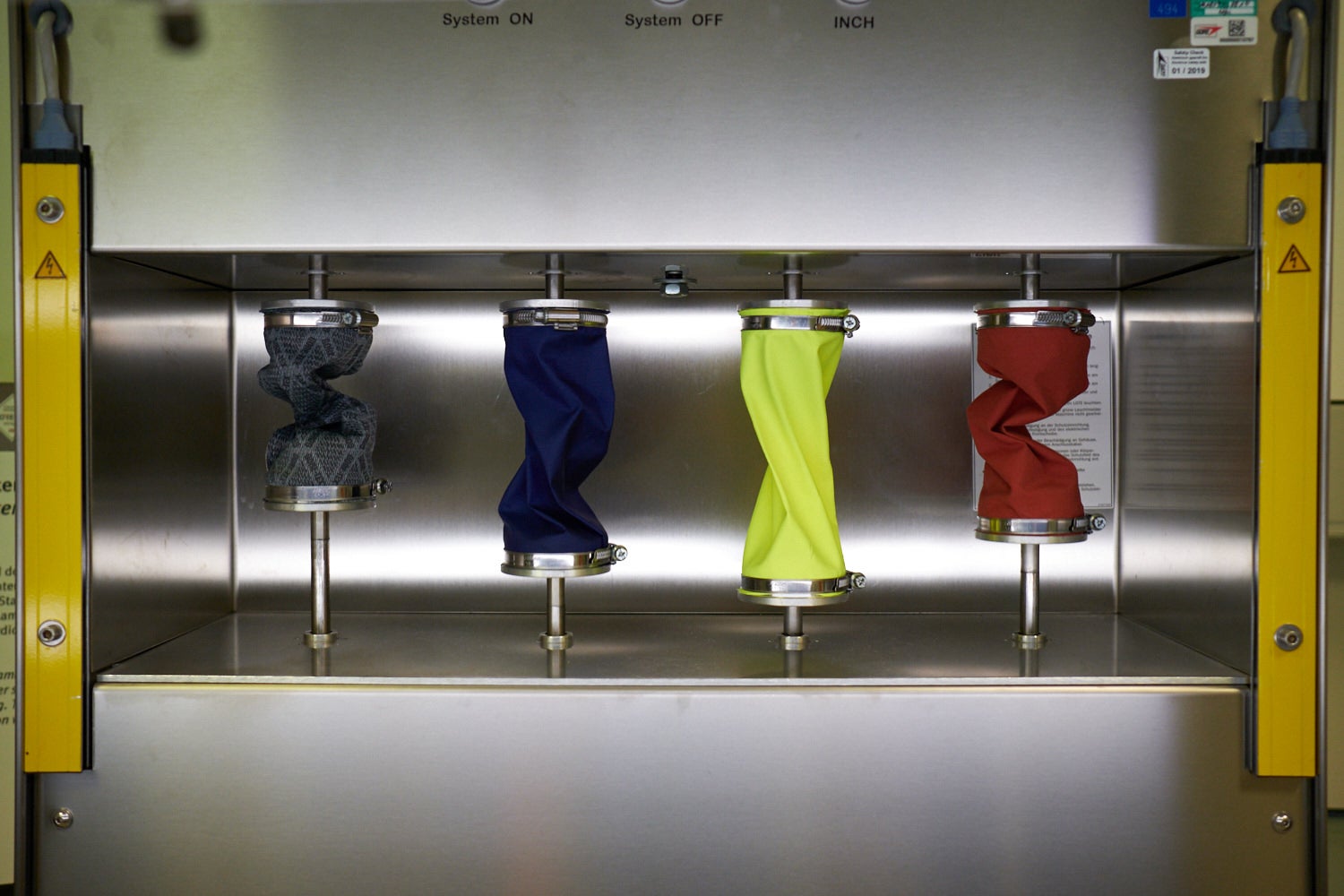
Part of the answer is in how products are tested. Marie separated quality testing, how a product performs when it’s new, from durability testing, how it holds up after washing, abrasion, sweat and UV. Both matter. You need really good performance to start with and quality testing is how you find that out, but that only tells you about the durability of a product on day one. “You have to understand in terms of real use, why do products fail,” Then you need to take what you learn back to the lab, simulate aging and then test again.
Until there’s an agreed standard, Marie’s suggestion was to look for a warranty, because it “shows that a brand or a company has confidence in their own products”. For the GORE-TEX® Brand, that confidence is reflected in the GUARANTEED TO KEEP YOU DRY Promise, which backs the waterproof performance consumers expect from their GORE-TEX® Products. Chris Speyer, Chief Merchandising Officer at MEC, described a version of that from the retail floor. MEC backs its products with a performance guarantee that “really creates accountability for us”. If a product doesn’t live up to what the customer needed, MEC takes it back, and it tracks returns and reviews by brand and by type of product. Then it acts on what it finds. “We reward the companies and brands that are making products that our customers love”, Chris said.
Repair has to be available
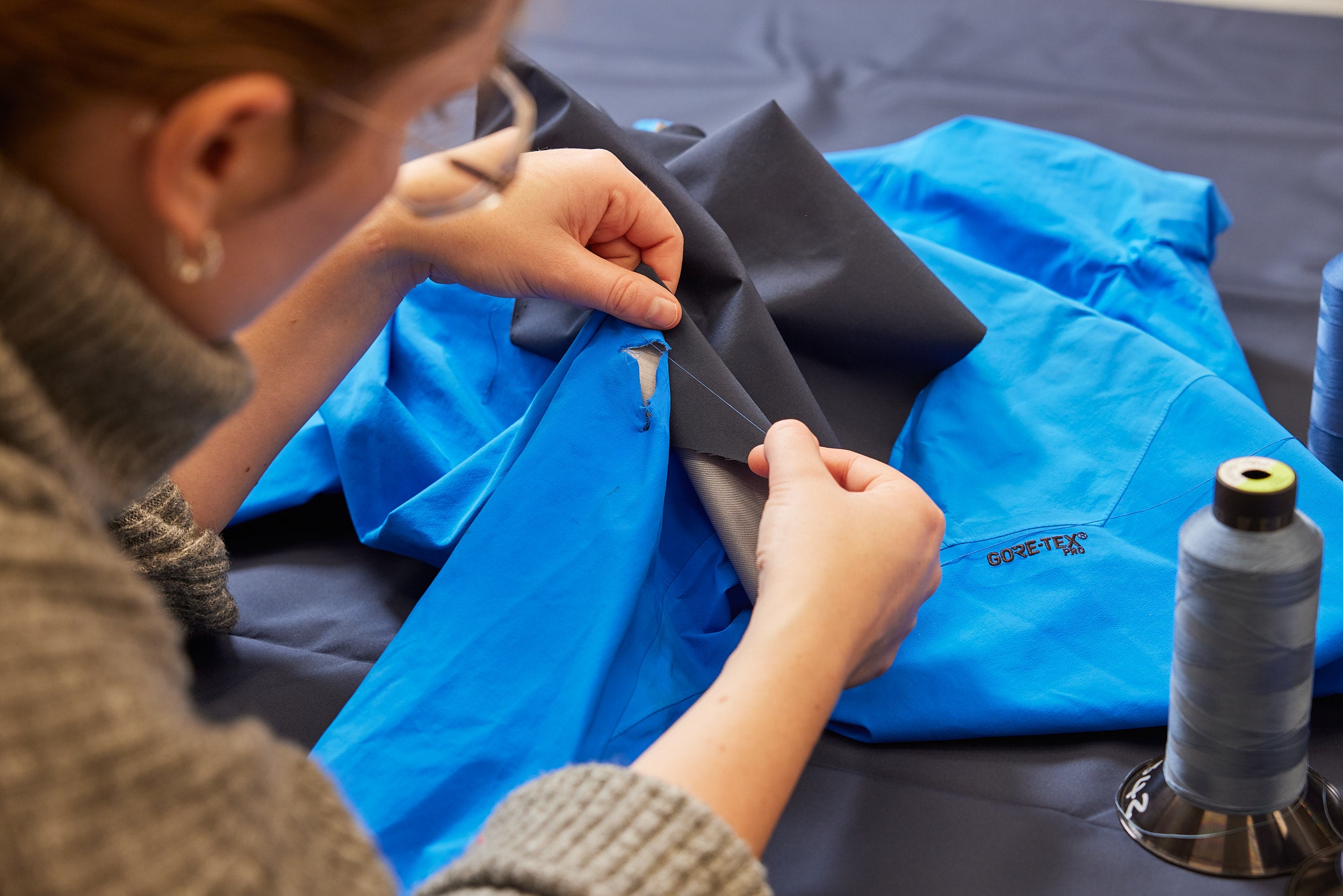
Many customers aren’t sure how to go about a simple repair, Chris said, and a lot of shops don’t have the capability, or the people, to suggest one. The GORE-TEX® Brand helps address this issue, making professional repair more accessible through a global network of authorised repair centers, where trained technicians use specialised equipment, materials and repair methods. According to Chris the interest in repair is clearly there “I think the customer is actually more open to it... And also explaining that they aren’t having to settle for a subpar experience after the repair.” At MEC, putting repair on show has brought people in: “they’re coming in for repairs because we’re marketing the repair… not just buying the goods”.
Why things stay
Why we let things go matters just as much. Catherine’s research found three main reasons people replace or throw away clothing: it no longer fits, it fails physically or visually, or they simply don’t want it any more. Physical failure tends to come out on top, especially in the things we use most, and as she put it, “physical durability tends to underpin even the emotional reasons”.
The emotional reason is the interesting point here, because a product can function and still be thrown away. Durability is where it starts, but it doesn’t decide whether something stays. Marie linked the two. If a jacket keeps performing when you are out in the mountains you come to trust it, “you tend to hold on to those garments”. For Chris, it comes back to purpose, which at MEC is “a lifetime of amazing experiences in the outdoors”. He said the industry should be selling “better, better, better” rather than more and more.
Value beyond the first owner
Selling better also means a product can have more than one owner. A jacket that no longer lives in one wardrobe can happily live in someone else’s, but only if the next owner can trust what they’re buying. Catherine said durability is “that foundational piece” that supports second-hand and repair, provided a brand can prove and communicate that it has invested in it. Marie put the value in terms of use: consumers value performance over time, and “it’s about cost per wear instead of just the initial cost”.
That value isn’t only the buyer’s. Marie said the old, linear system gives a company income at one point in time, whereas a circular system can “create revenue at several points”. MEC has seen what that looks like. Its Gear Swap began as a periodic event where members trade and sell previously owned gear, and now has a dedicated store in Kelowna, BC. Customers describe it as “a treasure hunt”, and sChris said it has brought “a whole new customer group” through the door. He sees the opportunity for the industry in learning “how to sell pre-owned gear as well as we sell new”. WRAP’s 'Displacement Rates Untangled' research points the same way; Catherine said peer-to-peer resale has “a displacement rate of around 65%”, which means second-hand buying often replaces buying new, not just adds to it.
Which brings us back to the jacket with the worn cuffs. Marie put it like this “Anyone with enough money can wear a brand new outdoor jacket. But to have a worn jacket, you need to have experienced true adventures, real hikes, real mountains, forests, etc. so a worn jacket is actually evidence of courage and sweat and real experience.”
Wear is proof of time spent outside, yet a lot of us still treat it as a flaw when it’s time to decide whether or not to keep an item. Perhaps we should start to look at it more as a badge of honour, for the stories that still live in the garment, worn with pride. Whether a worn jacket keeps its value depends on who is looking. To the person who wore it, it can be worth more than the day it was bought. To the next owner? Well that depends on whether they can trust it.
Getting someone to keep a jacket for longer starts with good fabric and constructions. The rest, the “secret sauce” if you like, is something brands, retailers, researchers and the people who wear it are all still adding to. We know that proof builds trust and repair can help keep suitable products in use for longer. What isn’t in doubt is why it’s worth the effort. A lot of resources go into the making of a jacket, or pants or footwear for that matter, before anyone puts it on. And as Marie reminds us, the more times it gets worn, the more that cost is justified, and that’s true whether it’s the first owner or the second.