


Having made significant strides in reducing our emissions and other impacts in recent years, today our ambitions are bolder than ever.
At Gore Fabrics, reducing our carbon footprint isn’t just about meeting a target: it’s about striving to play a leading role in making performance apparel more sustainable. Every step we take is part of a comprehensive climate strategy designed to meet our 2030 and longer-term ambitions.
Our initial goal was to reduce our Scope 1 & 2 carbon emissions by 60% by 2030. These are the emissions generated by our offices and the six global manufacturing facilities that produce GORE‑TEX® Products, along with the energy purchased to power all those sites. This goal aligns with the Paris Agreement’s goal of limiting global warming to 1.5°C.
We’re excited to have reached our initial Scope 1 & 2 reduction goal five years ahead of schedule, proving that bold action delivers real results. But this is just the beginning. Seeing what’s possible has prompted us to move the needle even further: our new target is an 80% reduction.
Our second goal is to achieve a 35% reduction in Scope 3 emissions by 2030—emissions not produced directly by us but resulting from activities across our value chain, which influences decisions about what textiles and membranes to use.
Since 2019, many steps we’ve taken towards lowering our emissions have been driven by a belief that our industry can, and must, accelerate change. Between 2023 and 2024 alone, we cut our total carbon footprint by nearly 10% across all three scopes. This is the kind of progress we can achieve when we act with purpose.
These seven ways show what that looks like in practice.
1. Encouraging GORE-TEX® Gear to Be Used as Long as Possible
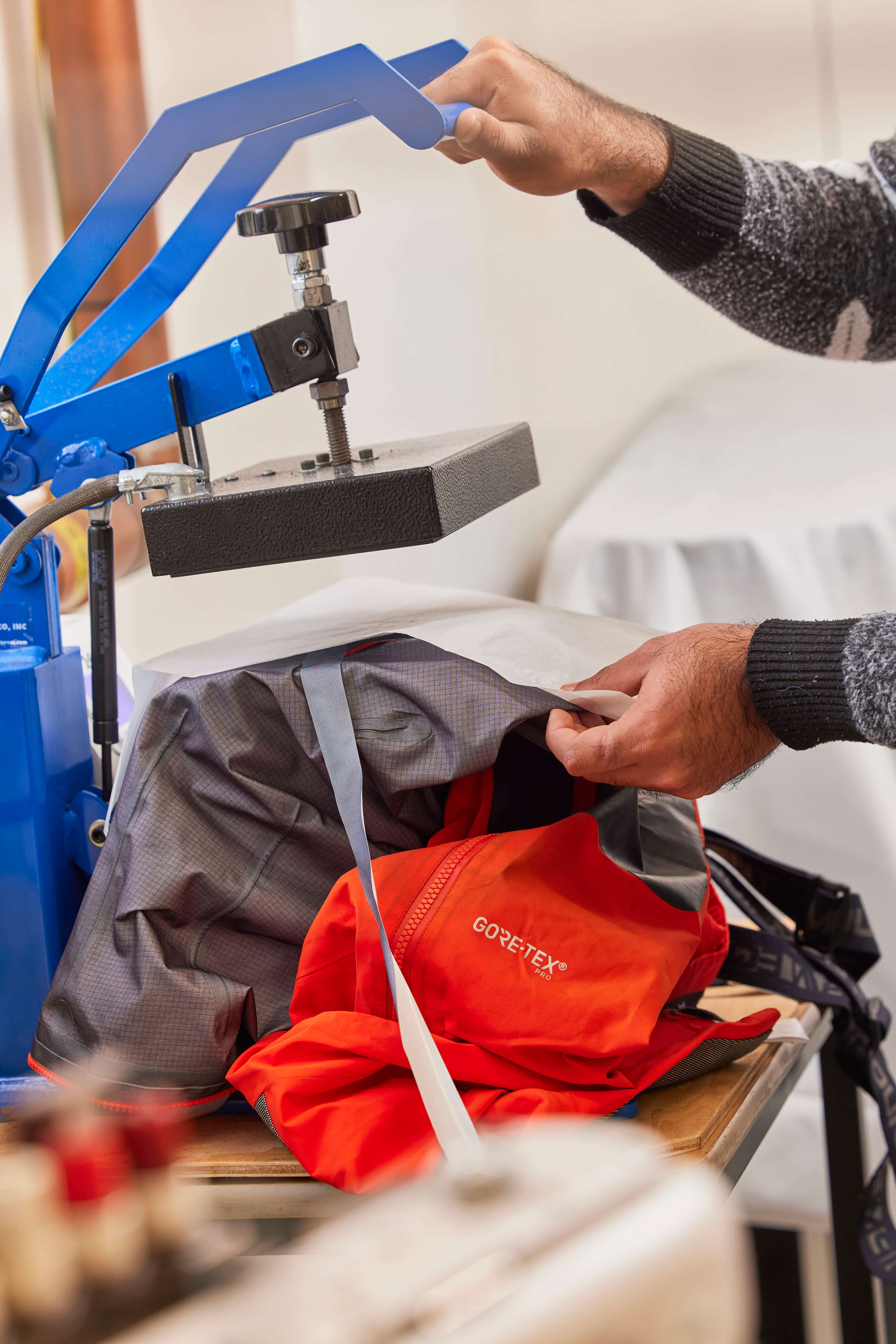
A very impactful way to reduce emissions is to avoid generating them in the first place. That’s why we have a dedicated team exploring ways to keep products in use for as long as possible to avoid higher emissions in creating new products; for instance, repair or subscription models. Several of our brand partners, such as Arc’teryx, Patagonia and REI, also have trade-in and resale systems, keeping refurbished GORE-TEX® Products in use for longer. We also support numerous authorized repair centers and provide detailed wash and care instructions to help wearers maintain gear performance over time.
2. Transitioning to 100% Renewable Electricity
The next big part of this reduction progress comes from transitioning energy sources: 100% of the electricity that powers our Gore Fabrics manufacturing facilities around the world now comes from renewable sources. In Kentucky, USA, for instance, we’ve invested in a 20-year contract with a 320-acre solar farm, which supplies around 90% of the electricity needs for our Delaware and Maryland, USA, manufacturing plants. You can learn more about it here.
3. Reducing Fossil Fuels
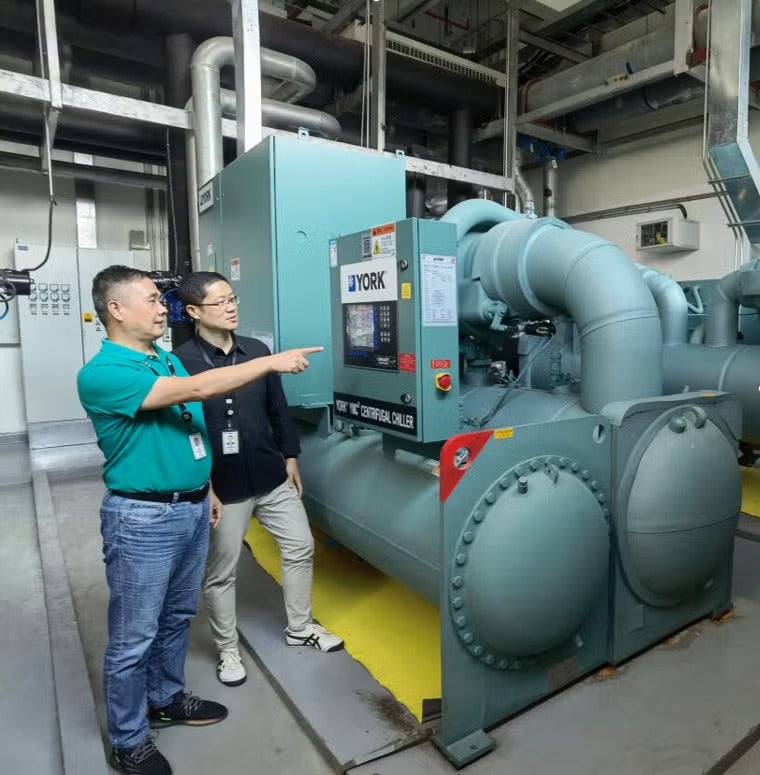
Since 2021, we’ve continuously reduced the amount of natural gas we burn. Part of that effort involves updating equipment: replacing inefficient, fossil-fuel-powered machinery at the end of its life cycle with efficient electric alternatives. In China, for example, we installed a new high-efficiency chiller which integrates a heat pump, allowing us to reduce natural gas consumption at the facility by more than 40%. In Germany, we replaced a fairly large gas-fired boiler generating steam for our production lines with a neat, electric steam generator the size of a microwave.
4. Developing Innovative Membrane Technology
We’ve transitioned to our innovative Next-Gen ePE (expanded polyethylene) GORE-TEX® Membrane*, which has a lower carbon footprint** than our previous polymer and is combined with carefully selected lower impact textiles, including recycled, solution-dyed, or undyed textiles***.
By the end of 2025, the vast majority of GORE-TEX® Consumer Products will be made without intentionally added per- and polyfluorinated substances (PFAS). Our product lines for safety, workwear, and defense professionals are also fully adopting the technology over the next few years.

5. Using Recycled Fabrics
Today, 40% of the fabrics we source from vendors are recycled, measured by meters. Using recycled textiles uses fewer virgin resources compared to creating new, so we’re now significantly expanding our offering of recycled polyesters and increasingly switching from virgin nylon to recycled nylon. Additionally, we’ve partnered with materials engineering company Bionic to create GORE-TEX® Products made from recycled ocean plastic, which has made a tangible impact on local coastal communities.
6. Improving the Dyeing Process
When we talk to suppliers about the most energy-intensive processes in a yarn mill, they consistently point to dyeing. According to Aii's latest "Roadmap to Netzero Report," textile manufacturing is responsible for 55% of the industry’s total carbon footprint, with dyeing processes making up a significant portion of that impact.
With solution dyeing—where color pigment is added directly to the fiber before it’s made into a material—we use fewer chemicals, less water, and reduce carbon emissions compared to conventional dyeing methods, according to the Higg Materials Sustainability Index (MSI). It also improves color fastness. Next-generation GORE-TEX® Pro Products, along with other select GORE-TEX® Products, are made using this technique.
7. Contributing to Collective Action to Decarbonize the Upstream Supply Chain
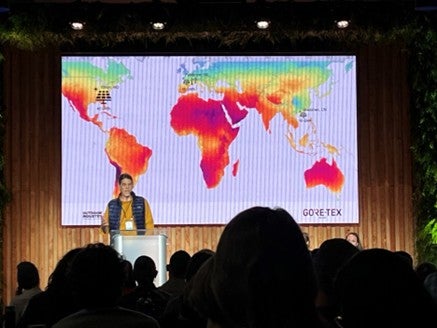
Gore continually collaborates with a broad array of stakeholders on decarbonization, such as the Outdoor Industry Association (OIA), the Apparel Impact Institute (Aii) in the US and the European Outdoor Group (EOG). By working together, we can make a greater difference—both by striving to drive change in our supply chains and by generating research and insights that help suppliers transition from fossil fuels to electric equipment.
More recently, together with four US brands, we supported the creation of a tool for plant managers that highlights the opportunities to electrify their equipment and the long-term cost benefits.
Looking Ahead: Advancing our Climate Commitments
For all the progress we’ve made, the challenge ahead remains significant. Achieving meaningful long-term impact requires continued collaboration, long-term thinking, and consistently prioritizing energy-saving initiatives—just as we have done over the last five years. I really appreciate the serious commitment we’ve made to staying on this course and the contributions from our teams across the globe towards this commitment
I’ve been working at Gore for nine years now. In that time, I’ve seen us move from simply setting goals and getting the message out to working more collaboratively with our partners and transparently sharing our progress. I believe that soon, we’ll see even more breakthroughs—product technologies or energy supply opportunities we can’t even imagine today—that will help us continue decoupling growth from carbon emissions and lower our impact further.
* Currently available in consumer products only; coming soon for professional products
** Through the laminate’s innovative membrane and select textiles (per Higg MSI)
*** Depending on laminate choice