

For many types of products, including garments, longer use can reduce their environmental impact, but the textile industry still lacks a common method to measure and compare durability. This project aims to fix that.
When it comes to the environmental impact of clothing, longevity is critical. Studies show that doubling a garment’s active lifespan can almost halve its climate impact; others estimate that adding just nine extra months of wear can cut carbon, waste, and water use by 20%.[1][2] Yet despite this, the textile industry continues to move in the opposite direction—producing more clothing, at lower quality, designed to be replaced quickly.
Durability is a critical factor in sustainability but today, the textile industry has no common way to measure or compare how long final products, not only the textiles, truly last. Without that, durability can’t be fully factored into sustainability standards, policy, or consumer choices.
This gap matters. Regulators in both the US and EU are developing ways to measure product sustainability, but until durability is included, the full picture remains incomplete. A product that’s used and lasts significantly longer can offset its higher production impact by eliminating the need to produce and consume an additional or new product. That’s why our goal is to ensure that durability is measured and recognized within sustainability frameworks, because product longevity is one of the clear paths to lower impact over time.
“Durability is widely recognized as an important factor in sustainability, but it can’t be fully accounted for until a common evaluation method exists.”
Consumers want this information, too. An EU survey showed that 88% of European consumers believe clothing should be made to last longer [3]. Such information could take the form of a star rating displayed on product labels, but that doesn’t exist for clothing today. Introducing clear durability information could encourage positive change across the industry, motivating brands to improve and empowering consumers to choose better.
That’s where Gore Fabrics saw an opportunity: to turn a long-standing challenge into collaboration and measurable change.
Seeing an Opportunity
I joined Gore Fabrics a few years ago, and my role involves connecting with academics, regulators, NGOs, and other sustainability professionals. Having worked in the textiles industry for years, I knew the challenges: increasing volumes, declining quality, and no shared durability method.
Inside Gore, I knew there were these huge labs in which functionality was being tested and measured, but I hadn’t realized the high level of technical expertise on how to test for durability. I saw an opportunity to share some of this for a common purpose and to collaborate with industry partners to create real change. I started thinking about how we could create a race to the top in terms of textile quality, rather than the race to the bottom that we often see today.
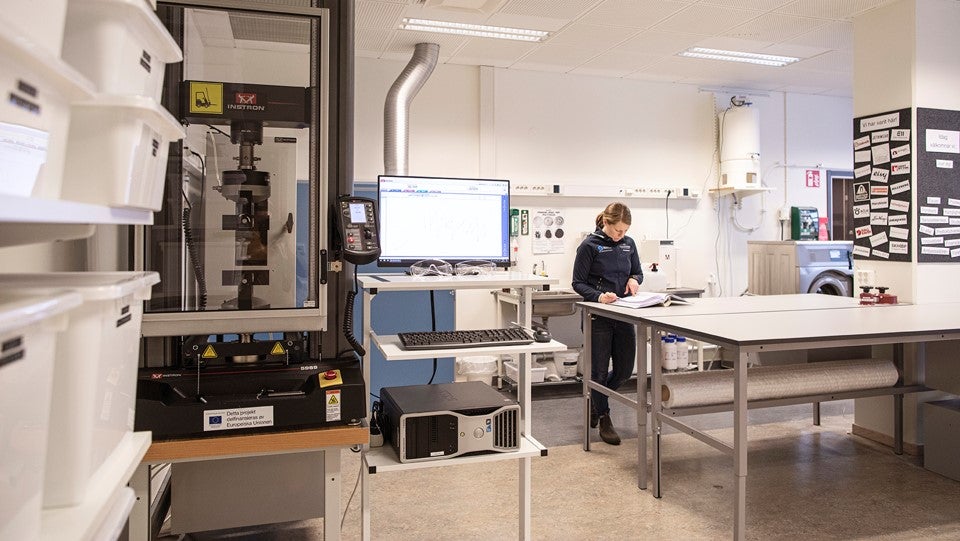
As I reached out to colleagues and partners, I found immediate interest in collaboration. The next step was to find a research institution specializing in performance and sporting goods. Mid Sweden University’s Sports Tech Research Centre was ideal. They had already begun exploring how outdoor jackets perform over time in second-hand use, and their advanced facilities, like a simulated wind and rain tunnel, made them a perfect fit.
Building the Collaboration
We asked the university to expand their research to focus on evaluating the durability of waterproof and breathable jackets more broadly. That’s how the project began. Today, about 45 organizations are involved, including brands such as Patagonia, The North Face, Arc’teryx, and Fjällräven, as well as public procurement entities like police departments that rely on functional workwear.
To ensure the method would apply across the market, we also worked hard to get other membrane makers to join. While these companies are typically competitors, their involvement in this research reflects a shared interest in advancing industry-wide understanding. Gore Fabrics helped bring the industry together, but the research itself is led independently by Mid Sweden University and fully funded by the EU. That independence is vital for scientific credibility and real impact on society, the industry and ultimately, the environment.
Many companies already do quality testing for factors such as how waterproof or colorfast a product is, but these tests often focus on new products rather than performance over time. The study’s approach looks at real-world evidence of how and why outdoor jackets fail and what factors decide the end use. This helps to simulate aging and test the things that matter in real life.
Learning from Worn-Out Jackets
To develop the method, the university first collected worn-out jackets from real users and looked at what was starting to fail and why. What provokes ageing? Are there common weak points across different brands, membranes, and uses? Factors such as wear & tear, sweat, UV light, washing, creams, and dirt could all play a role.
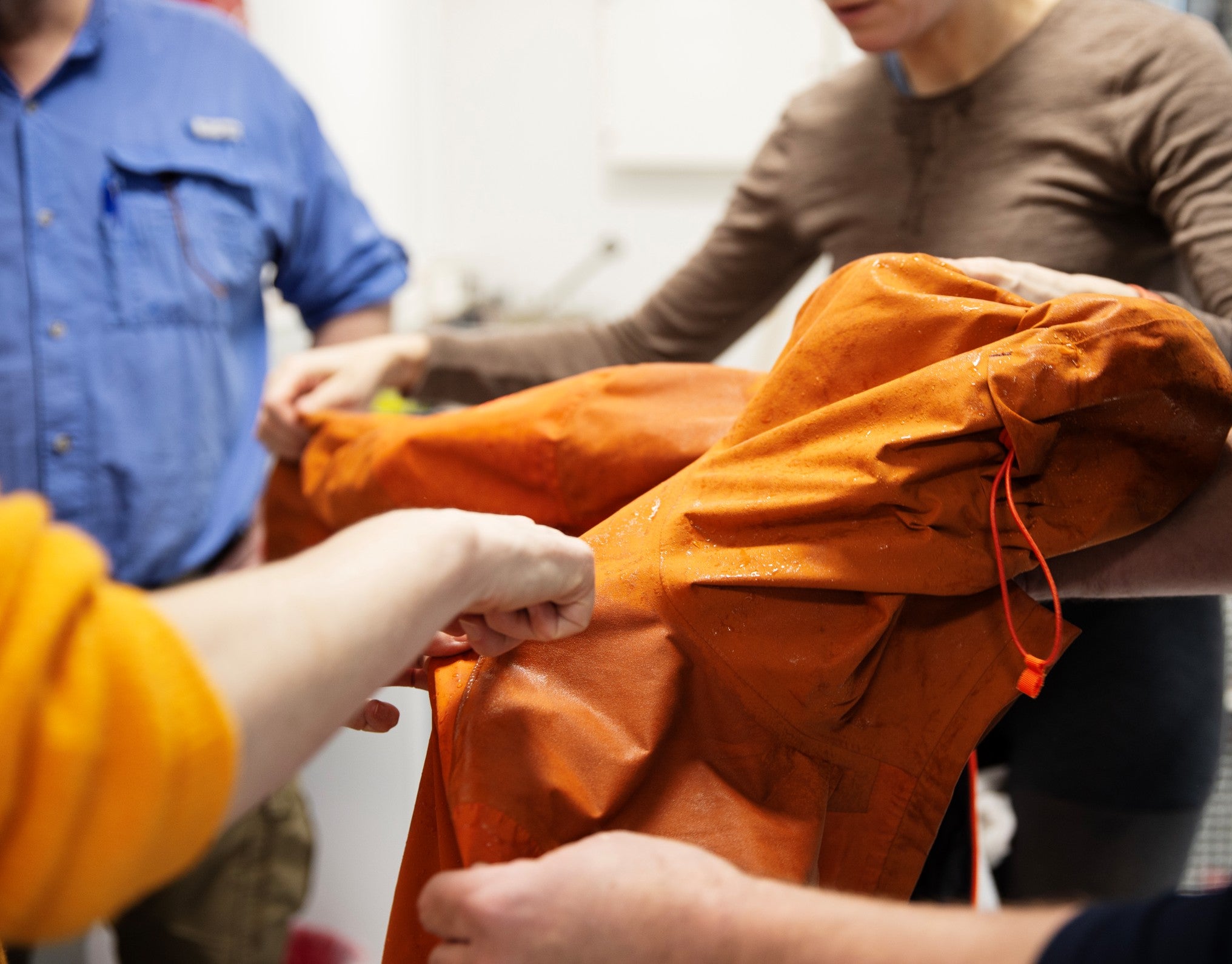
After a visual inspection, the jackets were put on mannequins in the weather tunnel at Mid Sweden University, as well as our own on-site rain room, to verify where they leak. One key finding was that a jacket’s lifespan largely depends on how well its membrane holds up—whether it resists delaminating or cracking. Zippers and holes can be repaired, but when the membrane fails, the jacket’s life is effectively over. The testing also revealed that construction, the way a jacket is put together, is equally important. The main material could be great but if the seams don’t hold up, the jacket will still leak.
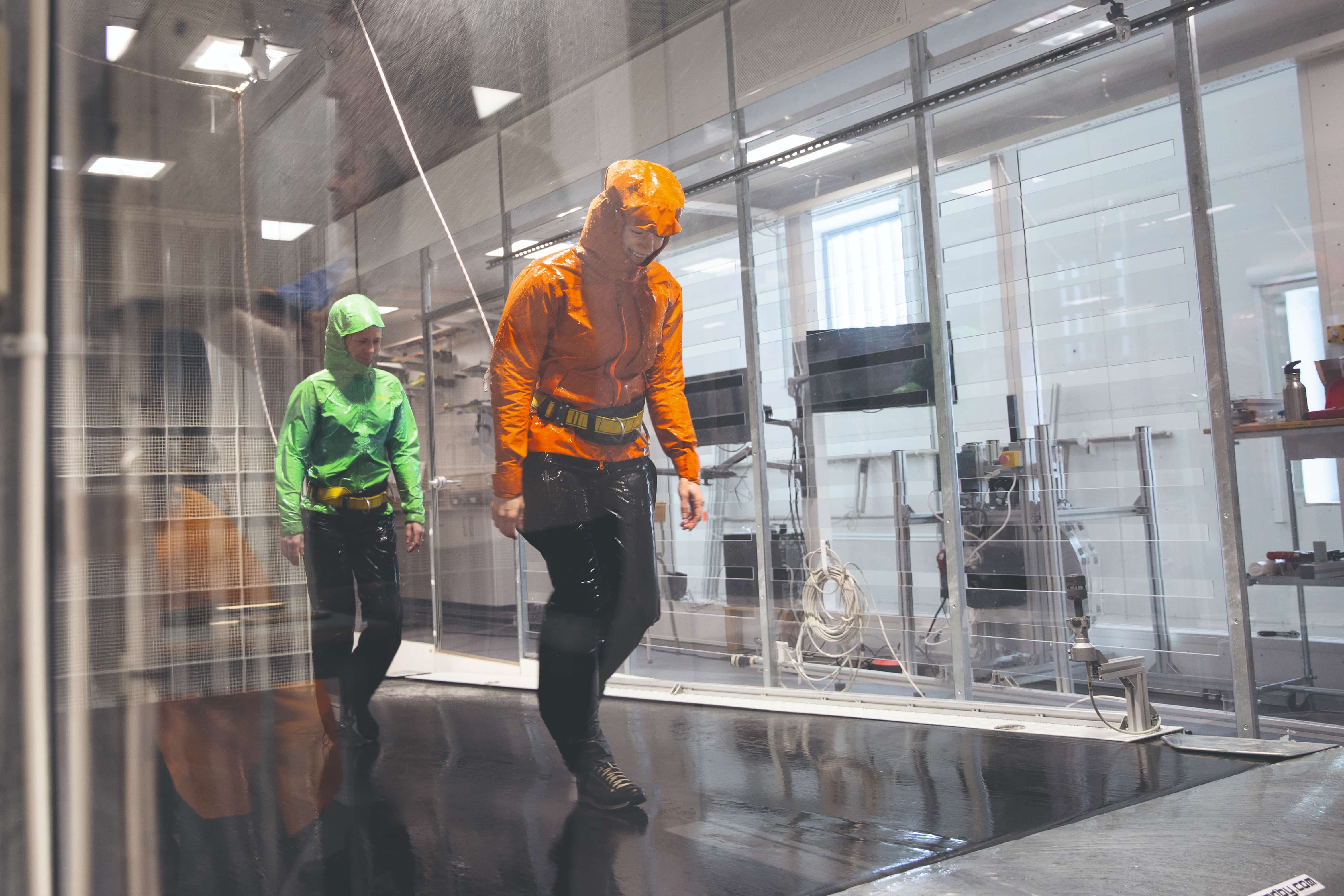
Another finding is that performance cannot always be visually seen; some jackets looked aged and still performed, whereas others looked new but leaked. This aligns with what we’ve learned through our own research at Gore and is why, before any GORE-TEX® Product goes into manufacturing, the style (the specific product design) is tested to our defined criteria and approved.
A critical final insight is that the user plays an important role in how long a jacket lasts. From inspecting the jackets, it was evident that washing, care, and maintenance make a significant difference to longevity.
With these insights, the university can help work toward a standardized lab test for durability that applies across the market. Setting thresholds and performance levels will make it possible to compare jackets and identify which ones last longer.
Going Further, Together
The textile industry needs ambitious change, and we recognize that collaboration is absolutely key to making it happen. At Gore, we often talk about Going Further, Together—a philosophy that sums up how we want to drive sustainability forward. By working with partners across the industry, we can improve products for the future. And to do that, it’s clear that establishing a common method to evaluate durability is crucial. We’re excited that this journey is already well underway.
Sources:
[1]Chalmers University Of Technology, “Environmental Assessment Of Swedish Clothing Consumption – Six Garments, Sustainable Futures,” (2019)
[2] Wrap, “Extending Product Lifetimes: Wrap’s Work On Clothing Durability,” (January 2024)
[3] European Environmental Agency, “Textiles And The Environment In A Circular Economy,” (November 2019)