

GORE-TEX Products are safe to wear and meet top industry standards, backed by trusted third-party certifications like OEKO-TEX and bluesign®.
At Gore, transparency is a critical part of how we design and manufacture every GORE-TEX Product. From the materials we select to the way we work with suppliers, transparency helps ensure that our products are made responsibly.
Whether it’s a jacket, a pair of shoes, gloves, or another type of garment, you can be confident that your GORE-TEX Product meets some of the highest industry standards. Our commitment to responsible performance extends across our entire supply chain, from the sourcing of raw materials to the manufacturing of the high-performing GORE-TEX Products that keep you protected in the outdoors.
In my role as an End-to-End Supply Chain Sustainability champion, I work across Gore’s Fabrics business to embed sustainability best practices within our own manufacturing plants and with our suppliers. We have a supplier sustainability roadmap, which we update annually, that allows us to set clear expectations for our partners in terms of sustainability. These efforts enable us to not only meet but exceed regulatory and customer expectations while staying true to our values.
Transparent manufacturing has long been a cornerstone of our approach, but regulatory changes are making transparency an industry-wide necessity. However, for us, transparency is not just about compliance, it’s about doing the right thing.
“When you choose a GORE-TEX Product, you can be confident that it has been manufactured responsibly and meets some of the highest industry standards.”
What Third-Party Certifications Say About Our Products
One of the key ways we drive transparency is through trusted third-party certifications. These certifications provide objective validation of our commitment to sustainability and responsible practices across our supply chain. There are three major certifications that guide our work: bluesign®, OEKO-TEX® STANDARD 100, and the Global Recycled Standard.
The bluesign® standard certifies that textiles are produced with minimal environmental impact and under safe working conditions. It verifies responsible resource use, checking that harmful chemicals are not used in production processes. In 2024, more than 94% of total shipped product volume within our Fabrics consumer business was bluesign® APPROVED.
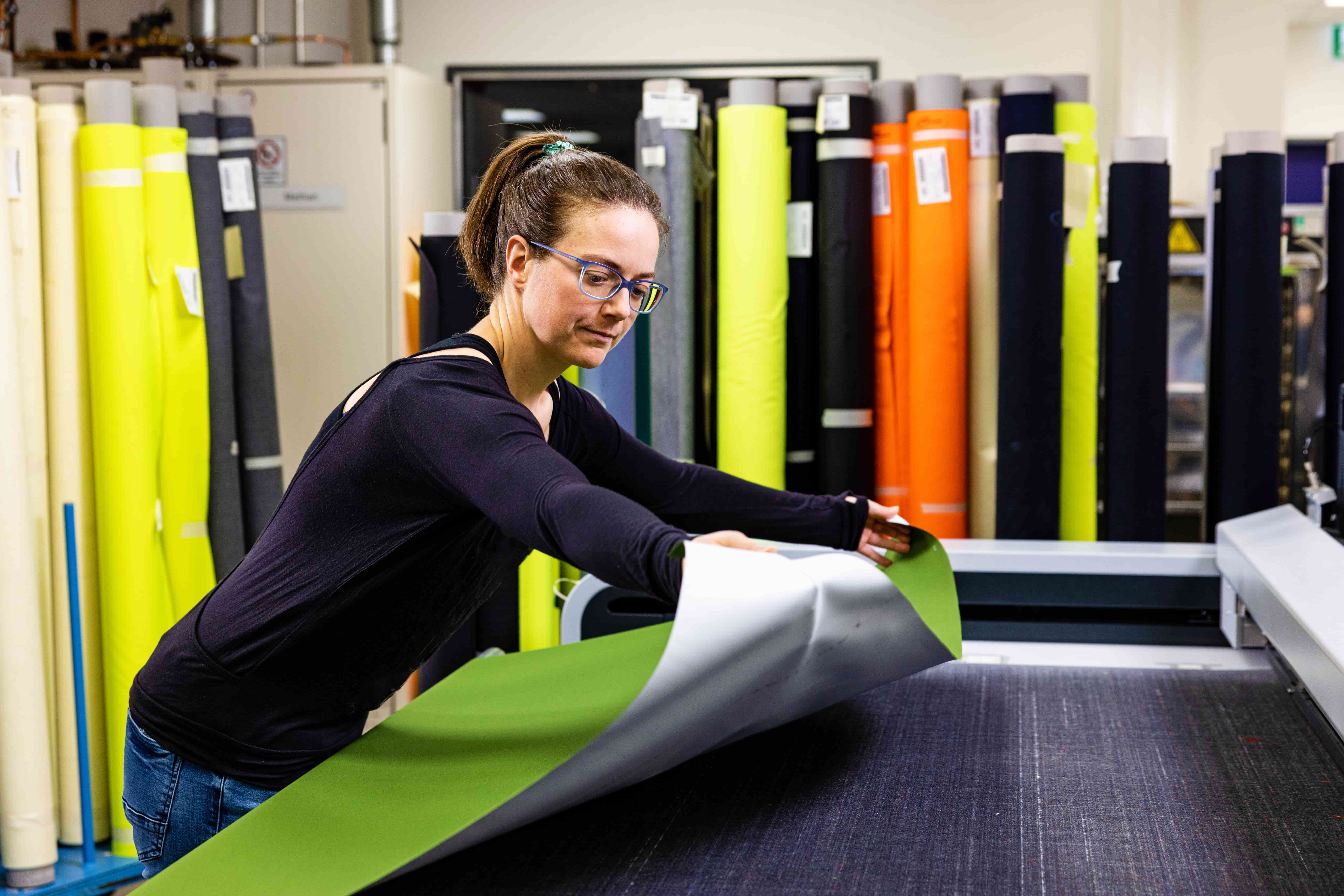
The Global Recycling Standard (GRS) verifies the authenticity of recycled materials used in textiles. This standard certifies that every step of the supply chain upholds social, environmental, and chemical responsibility. GRS certification provides a chain-of-custody system, preventing the mixing of virgin materials with recycled content. Gore’s Fabrics business received GRS certification for its manufacturing sites in Shenzhen, China, and Putzbrunn, Germany, since 2021. This means that within Fabrics, we can trace recycled materials from their original source through every step of the production process. It also helps us confirm that our recycled content is genuinely recycled, providing assurance to both regulators and consumers.
Elsewhere, OEKO-TEX® STANDARD 100 certifies that textiles are free from harmful substances. Within our Fabrics consumer business, more than 99% of total shipped product volume meets this standard, confirming that our fabrics are safe for our consumers to wear. This certification is an essential component of our broader commitment to sustainability.
Maintaining these certifications is a continual process. Each year, we undergo various assessments that evaluate our manufacturing facilities and provide recommendations for further improvements. We have a very close relationship with bluesign®, GRS, and OEKO-TEX®, and by keeping an open dialogue with these organizations, it means we can then have the right conversations with our supply chain partners.
Collaborating for Industry-Wide Impact
Yet while certifications play a crucial role in our efforts, we also recognize the need to go beyond them by actively engaging with industry initiatives. We work closely with organizations such as Cascale (formerly the Sustainable Apparel Coalition), the European Outdoor Group, and the Outdoor Industries Association. These collaborations allow us to share knowledge, pool resources, and drive industry-wide improvements in sustainability.
Cascale, for instance, provides assessment tools such as the Facility Environmental Module (FEM) and Facility Social and Labor Module (FSLM), which evaluate the environmental and social performance of manufacturing facilities. We use these assessments for our own plants and require our direct suppliers to participate as well. These assessment tools provide a standardized approach to measuring and evaluating our own and suppliers’ facilities and provide guidance on best practice improvements to be made in future years.
One of our key priorities right now is reducing the carbon footprint of our supply chain, and the FEM assessment tool has been really important in helping us identify opportunities for reducing carbon emissions at both our manufacturing own facilities and those of our supply chain partners. This allows us to really focus on driving change where we can have the biggest impact.
Looking Ahead
Transparency and responsible manufacturing are ongoing commitments. Our aim isn’t just to meet the standards of today, but to help set the benchmarks of tomorrow. Through our third-party certifications, partnering with like-minded organizations, and continually evaluating our performance, we’re working to ensure the outdoors remains a place we can all enjoy for generations to come.